Established vs. New Build Negative Gearing from 1 July 2027
How the 12 May 2026 cut-off changes weekly after-tax holding costs on a $780,000 Brisbane house once salary offsets quarantine on 1 July 2027.
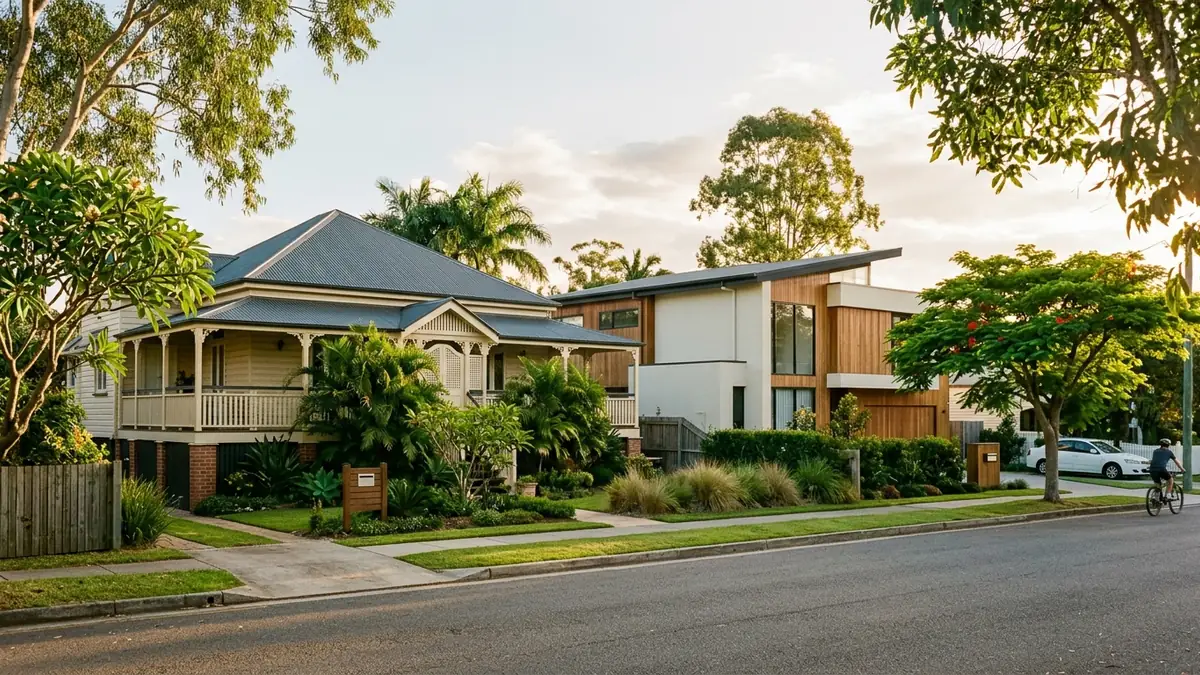
Key Numbers: Under the 1 July 2027 rules enacted under the Treasury Laws Amendment (Tax Reform No. 1) Act 2026 (12 May 2026 cut-off; illustrative modeling pending final ATO guidance), established homes bought after 12 May 2026 keep salary negative gearing in FY 2026–27, then quarantine rental losses from 1 July 2027. On a $780,000 Brisbane house ($720/wk rent, 80% IO at 6.2%), weekly holding cost rises from -$83/wk to -$167/wk (+$84/wk or +$4,356/yr) at 39%.
Why Your Weekly Cash Flow Splits After 1 July 2027
Most buyers run one set of numbers on auction day and overlook the year-two drop when their ATO salary refund disappears. Under the 1 July 2027 framework enacted under the Treasury Laws Amendment (Tax Reform No. 1) Act 2026 (illustrative modeling pending final ATO guidance), only two residential categories keep offsetting net rental losses against wages and salary income: qualifying new builds and grandfathered properties exchanged on or before 12 May 2026.
If you buy an established house after 12 May 2026, your property still receives its transitional ATO salary refund in FY 2026–27. From 1 July 2027 onward, that annual refund stops landing in your bank account. The pre-tax rent, interest, and council bills stay identical, yet your household budget must fund the full cash shortfall while the paper tax loss rolls forward.
Qualifying as a new build requires a newly constructed residential dwelling that has not previously been occupied as a residence or previously sold as new residential premises. House-and-land packages and brand-new off-the-plan apartments generally meet this threshold when settled directly from the builder or developer, whereas cosmetic renovations on an older home stay classified as established stock.
- Established post-12 May 2026: keeps salary offset during FY 2026–27, then quarantines net rental losses from 1 July 2027 onward.
- Qualifying New Build: exempt from the 1 July 2027 quarantine cap and retains annual salary tax refunds across future financial years.
- Grandfathered pre-12 May 2026: contracts exchanged on or before 7:30 PM AEST on 12 May 2026 preserve existing negative gearing treatment.
- Knockdown-rebuild nuance: tearing down an old dwelling and commissioning a newly constructed residence can qualify once complete, though pre-construction land holding interest before completion follows stricter timing tests.
Worked Dollar Breakdown: $780,000 Brisbane House (80% IO @ 6.2%)
Consider a $780,000 established house in Brisbane renting for $720/wk ($37,440/yr). On an 80% interest-only loan ($624,000 at 6.20%), annual mortgage interest is $38,688/yr, operating outgoings (council rates, water, building insurance, and property management) sit at $7,421/yr, and Queensland land tax is $0/yr because a 50% Unimproved Site Value ($390,000) sits below Queensland's $600,000 individual threshold.
Deducting $38,688 interest and $7,421 operating bills from $37,440 gross rent produces a pre-tax cash loss of -$8,669/yr (-$167/wk). Adding $2,500/yr in non-cash Division 43 capital works brings the taxable property loss to -$11,169/yr. In FY 2026–27, the ATO 39% Stage 3 refund of $4,356/yr halves your real weekly out-of-pocket drain from -$167/wk down to -$83/wk.
From 1 July 2027, an established purchase forfeits that +$84/wk refund at tax time while an identical cash-flow new build retains it. Because bank serviceability calculators still stress-test your mortgage at higher buffers, losing +$4,356/yr in after-tax cash directly shrinks your holding buffer unless rental yields catch up.
FY 2026–27 vs. From 1 July 2027 Cash Flow ($780,000 Brisbane House)
80% LVR IO at 6.20%, $720/wk rent, $7,421/yr operating costs, $0/yr QLD land tax, $2,500/yr Div 43, 39% ATO rate.
| Annual / Weekly Item | FY 2026–27 | 1 Jul 2027+ (Established) | 1 Jul 2027+ (New Build) |
|---|---|---|---|
| Pre-Tax Cash Flow | -$167/wk (-$8,669/yr) | -$167/wk (-$8,669/yr) | -$167/wk (-$8,669/yr) |
| Taxable Property Loss | -$11,169/yr | -$11,169/yr | -$11,169/yr |
| ATO Salary Refund (39%) | +$84/wk (+$4,356/yr) | $0/wk ($0/yr) | +$84/wk (+$4,356/yr) |
| After-Tax Out-of-Pocket | -$83/wk (-$4,313/yr) | -$167/wk (-$8,669/yr) | -$83/wk (-$4,313/yr) |
Net 2027 out-of-pocket jump for an established post-12 May 2026 purchase: +$84/wk (+$4,356/yr).
How Your ATO Tax Bracket (32% vs. 39% vs. 47%) Changes the 2027 Shock
Higher-income PAYG earners absorb a steeper dollar reversal on 1 July 2027 because each dollar of quarantined loss was previously refunded at a higher marginal rate. Applying the three main 2026–27 ATO Stage 3 resident brackets (30% + 2% Medicare = 32%, 37% + 2% = 39%, and 45% + 2% = 47%) to the exact same -$11,169/yr taxable loss widens the annual refund gap from $3,574/yr to $5,249/yr.
Jointly owned titles dilute the impact when partners sit on different salaries. Suppose Partner A earns $210,000 (47% bracket) and Partner B earns $95,000 (32% bracket) on a standard 50/50 tenants-in-common deed. Splitting the -$11,169 loss down the middle yields a blended refund rate of 39.5% ($4,412/yr combined), rather than the $5,249/yr many couples assume before settlement.
2027 Salary-Refund Loss Across ATO 2026–27 Marginal Brackets
Calculated on the fixed -$11,169/yr taxable loss from the $780,000 Brisbane benchmark above.
| ATO Bracket (incl. 2% Medicare) | FY 2026–27 After-Tax Cost | 1 Jul 2027+ Est. Cost | Extra Cash Needed After 2027 |
|---|---|---|---|
| 32% ($45,001–$135,000) | -$98/wk (-$5,095/yr) | -$167/wk (-$8,669/yr) | +$69/wk (+$3,574/yr) |
| 39% ($135,001–$190,000) | -$83/wk (-$4,313/yr) | -$167/wk (-$8,669/yr) | +$84/wk (+$4,356/yr) |
| 47% ($190,001+) | -$66/wk (-$3,420/yr) | -$167/wk (-$8,669/yr) | +$101/wk (+$5,249/yr) |
| 50/50 Joint (47% + 32% Partners) | -$82/wk (-$4,257/yr) | -$167/wk (-$8,669/yr) | +$85/wk (+$4,412/yr) |
Check ownership percentages before signing a contract: changing title splits after exchange usually triggers full state Transfer Duty.
Division 43, Upfront Entry Cash & Releasing Quarantined Losses Later
Depreciation still widens the cash gap between post-1987 builds and pre-1987 homes regardless of negative gearing changes. For residential construction started after 15 September 1987, a $240,000 eligible construction base creates a 2.5% annual Division 43 deduction of $6,000/yr—shielding $2,340/yr in tax at the 39% bracket without spending an extra dollar of household cash.
Always pair tax modeling with total settlement cash checks. For instance, an $850,000 house in Parramatta NSW at 80% LVR requires $205,237 upfront cash ($170,000 deposit, $32,437 NSW Transfer Duty, and $2,800 legal costs) before your first tenant moves in. Paying down an extra $20,000 on entry for tax credits rarely fixes a tight cash reserve.
Quarantined losses on an established property do not evaporate. Under the enacted carry-forward ledger (commencing 1 July 2027; illustrative modeling pending final ATO guidance), locking -$11,169/yr across five loss-making years accumulates $55,845 of quarantined losses that release through two exits: offsetting future net rental profits once compounding rents lift your property into positive cash flow, or reducing taxable capital gains when you eventually sell under the 1 July 2027 CGT framework.
- Div 43 Capital Works: $240,000 eligible post-15 Sep 1987 build x 2.5% = $6,000/yr deduction ($2,340/yr tax saved at 39%).
- Div 40 Secondhand Exclusion: used carpets, blinds, and appliances in established homes bought after 9 May 2017 cannot be claimed unless replaced brand-new.
- Two Quarantined Loss Exits: carried-forward losses first shelter future positive rental income, and any remaining balance offsets capital gains at sale.
Run Full 8-State Transfer Duty & Unimproved Site Value Land Tax
The inline simulator above uses a fixed 80% LVR benchmark. Open the full 2027 Negative Gearing Calculator to enter your exact state, house vs. unit Site Value ratio, LVR, P&I vs. IO loan type, and Division 43 construction cost.
Run the 2027 Negative Gearing CalculatorMethodology & Assumptions
Cash flow figures model 80% LVR interest-only lending at 6.20% p.a., state land tax on Unimproved Site Value (50% House default), and ATO 2026–27 Stage 3 rates including the 2% Medicare levy.
Sources: ATO 2026–27 individual tax rates and Division 43/40 rules, Queensland Revenue Office land tax thresholds, Revenue NSW Transfer Duty schedule, and the Treasury Laws Amendment (Tax Reform No. 1) Act 2026 (commencing 1 July 2027; illustrative modeling pending final ATO guidance).
Frequently Asked Questions
Compare 10 Shortlisted Homes in One Private Spreadsheet
Shortlisting multiple houses across states? Compare FY 2026–27 vs. 1 July 2027 cash flow across up to 10 homes in one private Google Sheet or Excel workbook—try the 3-tab free starter ($0+) or get daily updates (US$29 one-time).
Compare $0+ Starter vs. US$29 Full Sheet